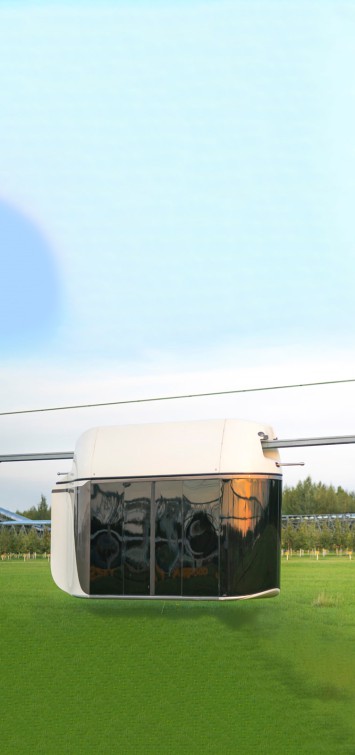
With a focus on sustainability, automation, and innovative engineering, Kathmandu Podway is shaping the future of smart, high-efficiency mobility across Nepal and beyond.
Its electric steel-wheeled vehicles, called uPods, operate autonomously on elevated overpasses at speeds of up to 150 km/h. This system offers a fast, safe, and environmentally friendly alternative to traditional ground-based transport. The elevated design minimizes land use, reduces environmental disruption, and ensures year-round operation regardless of weather or ground conditions. Kathmandu Podway's solutions are scalable and adaptable, making them ideal for both densely populated cities and remote regions with limited infrastructure
Kathmandu Podway’s string-rail technology offers a safer, more efficient, environmentally sustainable, and cost-effective alternative to conventional transport systems. Built to meet international standards, every solution emphasizes maximum safety, energy efficiency, and reliability—core principles that guide the company’s commitment to next-generation mobility.
This is more than just transport—it’s a leap forward for Nepal’s economy, tourism, and everyday life. We’re also working with universities and training centers to ensure Nepali professionals lead the way.
1. Construction Cost
Under comparable natural, climatic, and infrastructural conditions, the construction cost of the Kathmandu Podway overpass is significantly lower than that of conventional transport systems.
from 50% of the cost of construction of 1 km of cableway
from 10% of the cost of construction of a light rail overpass
from 4% of the cost of construction of 1 km of metro
2. Cost Determination Through Feasibility Analysis
The precise cost of each Podway transport complex in Nepal—including the cost per kilometer—can only be accurately determined through detailed pre-investment feasibility studies. The final cost is influenced by a range of technical and economic factors, including terrain, climate, route complexity, infrastructure requirements, and project scale.
Type and purpose of the complex: suspended, hinged, passenger, cargo, cargo and passenger, urban, high-speed intercity,
Estimated performance of the complex: per year, per day, during rush hours,
Design speed,
Terrain: plain, rugged terrain, foothills, mountains, etc.,
Natural and climatic conditions and their specific features in the project region that affect the design and technological features of the complex (bearing capacity of soils, permafrost, extreme air temperatures and wind loads, heavy snowfalls and heavy rains, sandstorms and tornadoes, floods, earthquakes, etc.,
Length of the route and spans, height of supports, height of passenger stations and cargo terminals,
Number of passenger stations, number of loading and unloading cargo terminals on the route.
3. Cost of & infrastructure complex
The cost of a Kathmandu Podway complex covers all essential components, including elevated track infrastructure, model of Pods, stations, control systems, utilities, construction, and certification—delivering a complete turnkey transport solution.
Second-level transport and logistics infrastructure – passenger stops and stations, cargo loading and unloading terminals, garages with repair shops, turnouts, etc.
String rail transport overpass (single-track, double-track or multi-track)
Rolling stock: steel-wheeled rail electric cars – Podway pods
Automated control system
Engineering networks and utilities, power supply and communications systems
Design and survey work
Civil and installation work
Start-up
Certification
4. Efficient Operations with Lower OPEX
The operating expenses (OPEX) of the Podway transport system is significantly lower than those of traditional transport solutions such as monorails, high-speed trams, subways, and ropeways. These costs vary based on factors such as route length, traffic volume, terrain, climate, and system configuration.
Total number of Pods on the route and their carrying capacity
Performance of the complex (per year, per day, during rush hours)
Estimated on-route speed of the rolling stock
Number of passenger stops, stations, cargo loading and unloading terminals in the complex and other infrastructure facilities of the “second level” in Kathmandu Podway Complex
Feasibility and Pre-engineering study
6 Months
The construction cost of a Kathmandu Podway complex is determined through a Feasibility and Pre-Engineering Study, which forms part of front-end engineering and is included in the project’s contract price.
Designing
12-18 Months
Construction and installation works, delivery of equipment and rolling stock
12-18 Months
Start-up, personnel training, and commissionings
3-6 Months
The design and construction can be carried out in parallel, if it does not contradict the legislation
Certification
Unconditional guarantee
24 Months
The warranty for the components of the transport and infrastructure complex will be stipulated by the contract
FAQs
Show All Hide All
Podway is an innovative, elevated transport system based on string rail technology developed by Unitsky String Technologies (UST). It consists of automated, driverless pods that travel on specially designed suspended tracks above ground, offering a sustainable, safe, and efficient alternative to traditional urban and intercity transportation.
Unlike conventional systems, Podway:
Reduces land use and environmental impact
Minimizes traffic congestion
Operates with high energy efficiency
Is scalable for both low-density and high-capacity routes
The system is ideal for modern smart cities, tourism zones, mountainous regions, and areas where conventional transport faces infrastructure challenges.
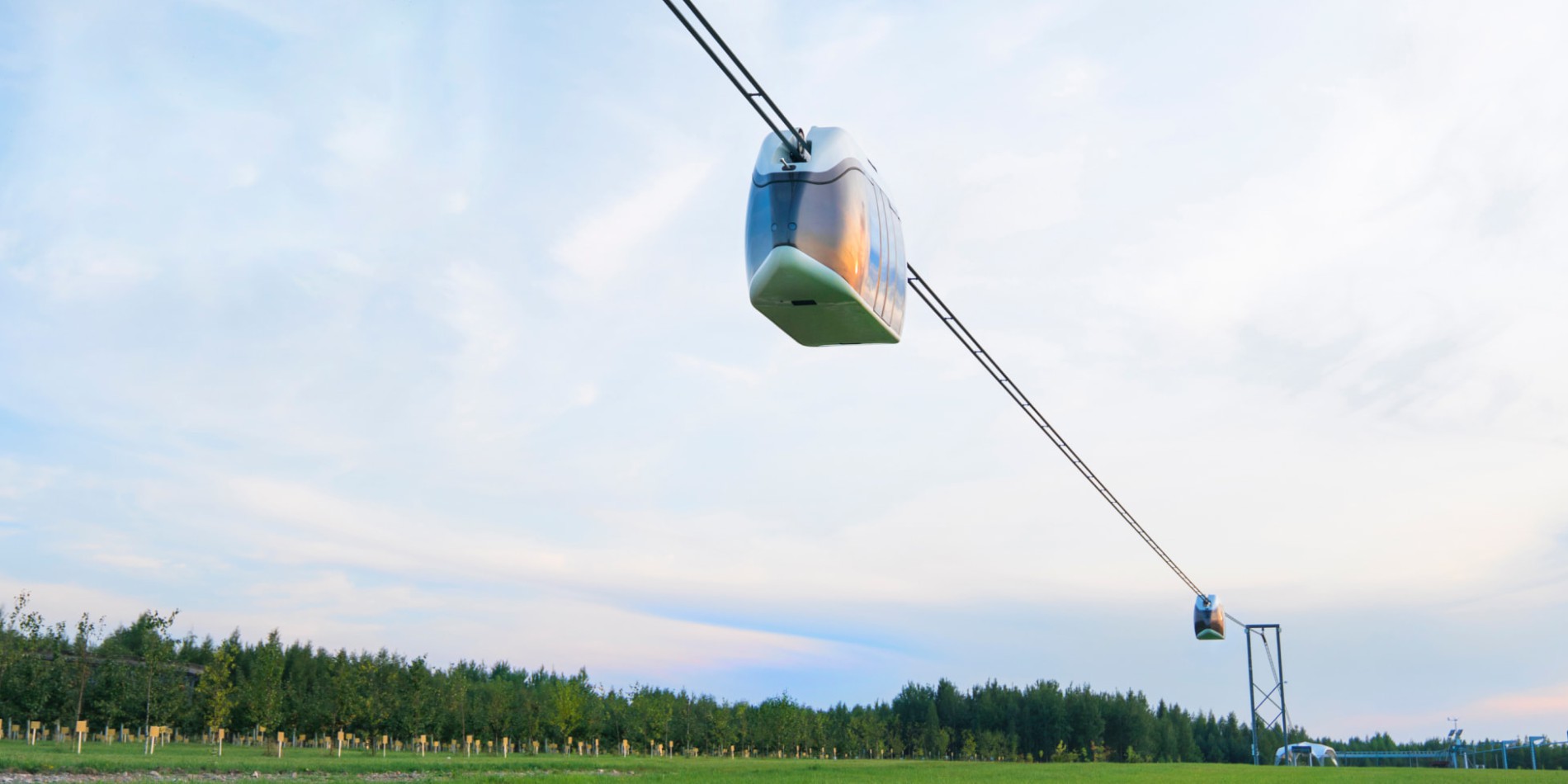
Podway is an innovative, elevated transport system based on string rail technology developed by Unitsky String Technologies (UST). It consists of automated, driverless pods that travel on specially designed suspended tracks above ground, offering a sustainable, safe, and efficient alternative to traditional urban and intercity transportation.
Unlike conventional systems, Podway:
Reduces land use and environmental impact
Minimizes traffic congestion
Operates with high energy efficiency
Is scalable for both low-density and high-capacity routes
The system is ideal for modern smart cities, tourism zones, mountainous regions, and areas where conventional transport faces infrastructure challenges.